
ART in Orvieto
Institute for Christian Studies · Toronto

ART Art · Religion · Theology in ORVIETO

A seminar and studio residency for practicing artists, art teachers, and graduate students exploring the relationship between art, religion, and theology in the medieval hill town of Orvieto, Italy.

Summer 2026 · Orvieto, Italy Exact dates to be announced

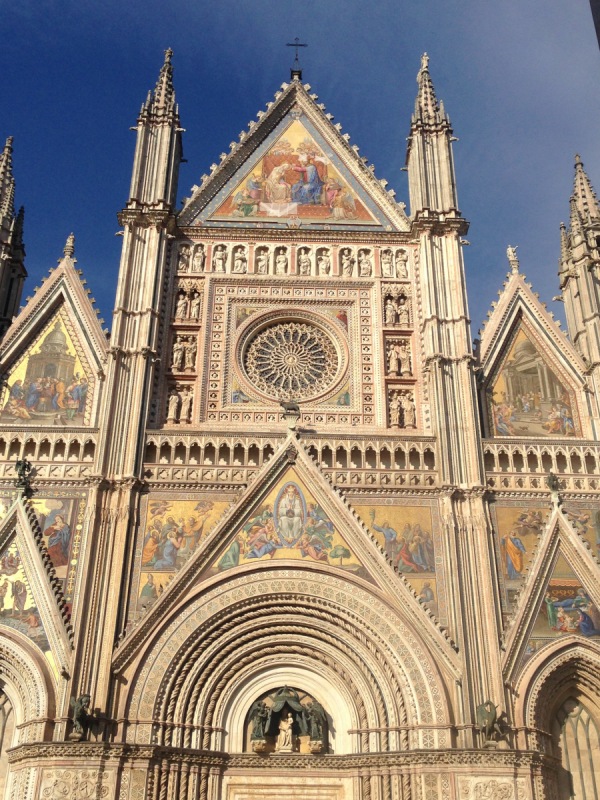
The ornate Gothic facade of the Duomo di Orvieto against a blue sky, with golden mosaics and rose window
The facade of the Duomo di Orvieto.
I  ·  The Town

An advanced summer studies program, ninety minutes north of Rome

ART in Orvieto offers an ecumenical exploration of Christian understandings of the arts: a residency designed for practicing artists, art teachers, graduate students in relevant fields, and other adult learners interested in engaging the intersection of art, religion, and theology.

The program moves at the pace of the town: unhurried days of reading, conversation, and sustained studio work, punctuated by excursions to the art of Rome, Assisi, and Florence.

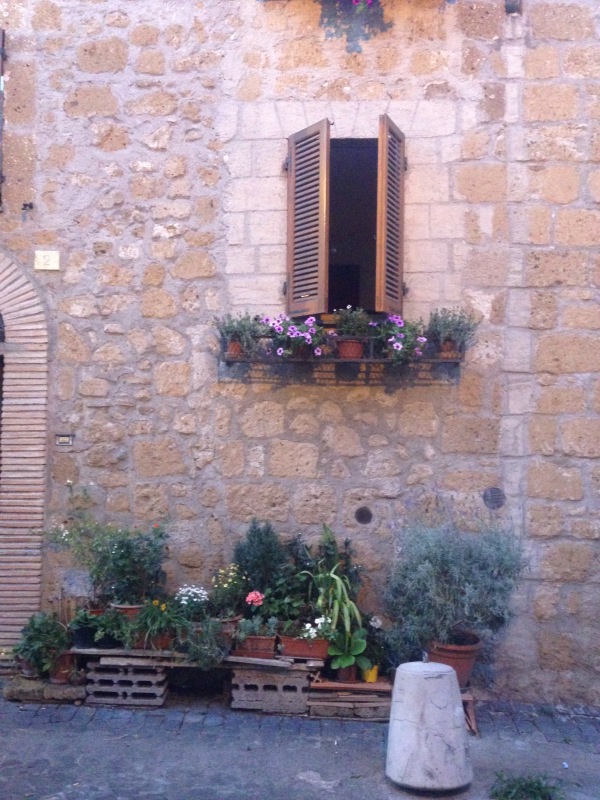
A stone house wall in Orvieto with wooden shutters open above a window box of petunias and a cluster of potted plants at street level
A street in the centro storico, Orvieto.
II  ·  The Monastery

A renovated 13th-century convent, held in common

The program occupies the superbly renovated medieval monastery of the Servite Order in Orvieto, the Convento dei Servi, positioned in the historic hilltop city centre, steps away from the ruins of an Etruscan temple and spectacular views of the valley below, one direction heading toward Florence and the other toward Rome. Accommodations, seminar rooms, and studio space are all housed within its walls.

The monastery is designed around a large cloister, and the whole complex dates to the 1200s. The Servite church, Santa Maria dei Servi, a large architectural gem refashioned in the 1800s, forms the west side of the cloister. The classroom where the Graduate Seminar meets sits across from the church on the main floor and contains a small library for participants' use. The studio runs along the north side of the cloister: two adjoining spaces under a beautiful vaulted ceiling from the 1200s, with plenty of room for sustained work. Each Studio Residency participant is allocated a personal workstation for the duration of the program, with continuous access to the studio throughout.

Interior views of the renovated monastery: white galleries with framed prints, a vaulted stone workroom with worktables, a corridor of framed artwork, and a sitting room
Inside the Convento dei Servi: galleries, the vaulted studio, and common rooms.

The space is leased from Gordon College of Wenham, Massachusetts, whose Studio for Art, Faith, and History makes its home here.

III  ·  The Hours

One seminar, one studio: the heart of the program

The program has two components, and participants may take both, or only one. The Seminar and the Studio Residency meet during the week; the studio itself is open to residency participants at all hours, and the library, classroom, and common area are available to everyone throughout the program. Priority for admission is given to those taking both.

The Graduate Seminar

Art, Religion, and Theology: Theologies of Art in the Christian Tradition

led by Rebekah Smick

For some, the idea of an expressly Christian art is a literal impossibility in the contemporary art world context: the sheer notion seems to defy the very nature of art as we understand it, suggesting propaganda rather than the free expression of an individual artist. Yet explicitly Christian art dominates the walls of most Western art museums, and much of it is thought to represent the height of Western art practice. What is this puzzling history able to tell us about the relationship of art to Christianity? How have Christians understood art to function religiously, and what relation does that have to how art is conceived in the modern context?

The seminar examines the art traditions of the three main branches of Christianity (Catholic, Orthodox, and Protestant) in their historical contexts, the theology pertinent to their understandings of the religious image, and what contemporary Christian philosophers and theologians have to say about the possibilities for Christian art in modern society. Taking full advantage of the setting, the seminar explores the art of Orvieto and its region as well as of Rome, Assisi, and Florence, in a mix of lecture and discussion on assigned readings.
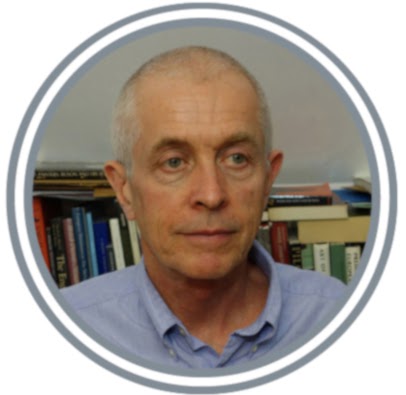
The Artists' Studio Residency

Sustained work on a particular body of work

led by David Holt

The goal of the studio residency is to help practicing artists make substantial progress with a particular body of work. Participants develop their artworks through various stages, from initial inspirations, ideas, and studies to more fully realized visual forms, while exploring relevant religious, theological, and art historical dimensions. The emphasis falls on the process of creation more than final completion, though there will be opportunities to display work produced during the residency.

Works in a variety of media are encouraged and supported. Practicing artists of all levels of experience are welcome, and guidance is tailored to individual needs: help with materials, techniques, and design issues; assistance in furthering technical skills; and direction in concept development, research, and interpretive methodologies. Alongside ongoing individual consultation, weekly sharing of one's progress with the group provides informed feedback and support. A list of basic supplies is sent to participants upon registration.

The Excursions · Weeks I & II

RomeAssisiFlorence

The excursions are an integral part of the program, and everyone participates.

The Graduate Credit Option

A formal course of study and practice at the graduate level. Those who complete the graduate requirements in the Seminar and/or Studio Residency may receive graduate credit toward: the Master of Worldview Studies (MWS-ART) degree program of the Institute for Christian Studies; a degree program in the Toronto School of Theology; or a degree program in another institution that accepts transfer credit. Credit is given to students formally admitted to graduate study in the respective institution.

The Audit Option

Regular attendance and full participation in the Seminar and/or Studio Residency, on a not-for-credit basis: completing the readings and joining in discussion; engaging in work on one's own artistic project and sharing in artistic conversation with others. Participants taking this option can receive a Certificate of Completion for studies in ART in Orvieto, suited to those seeking professional development rather than graduate credit.

IV  ·  The People

Your leaders in Orvieto

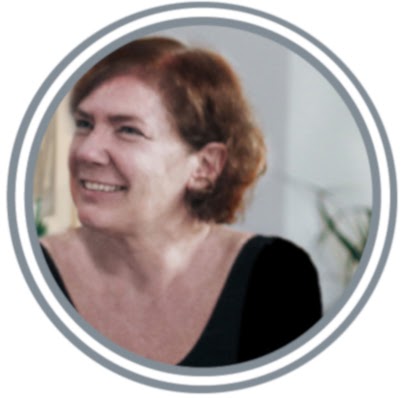
Portrait of Rebekah Smick

Rebekah Smick

Graduate Seminar Leader & Program Director

Associate Professor of Philosophy of the Arts and Culture at the Institute for Christian Studies, an affiliate of the Toronto School of Theology. Her publications include a book on the Western survival of classical culture and book chapters on Italian art criticism and theory. She is a contributor to the book accompanying the 2016–17 Art Gallery of Ontario / Musée d'Orsay exhibition Mystical Landscapes: Masterpieces from Monet, Van Gogh and More.

View Rebekah's faculty page

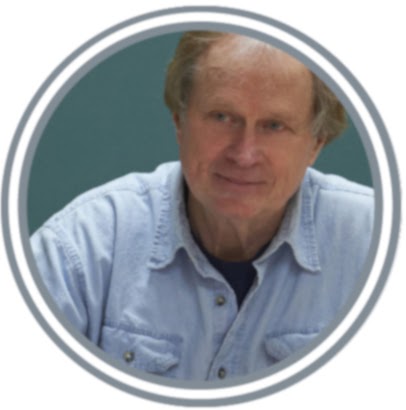
Portrait of David Holt

David Holt

Artists' Studio Residency Leader

A graduate of the Accademia di Belle Arti di Firenze, David Holt has special interests in Italian art and world religions. He has exhibited widely in the USA and Canada, held a painting grant from the Ludwig Vogelstein Foundation and a residency at the Ragdale Foundation, and was a member of Loop Gallery, an artists' collective in Toronto. A former long-time Professor of Art at Marymount College, Tarrytown (later of Fordham University), he now teaches art at Upper Canada College.

View David's artwork

Portrait of Thomas McIntire

Thomas McIntire

Program Associate

Emeritus Professor of History and Religion in the University of Toronto and Emeritus Fellow of Victoria College, Toronto. Among his publications are a book and articles on religion in Rome, Umbria, the Marches, and Romagna. His current work is in World Christianity.

V  ·  The Stay

Rooms in the convent, meals in the refectory

A long communal dining table set for a meal, fresh Italian bread, an espresso with an amaretto biscuit, and a plate of bruschetta and grilled vegetables
The communal table: meals are taken together in the convent's refectory.

Accommodation

  • Rooms are single or double occupancy, always with single (twin) beds, plus a desk and chair and a private en suite bathroom; towels and bedding provided.
  • Indicate your room preference on the application form; preferences are honoured as room availability at the monastery allows. Single rooms are limited.
  • Air conditioning in some of the convent's public spaces during the summer months; all rooms are provided with fans. Wifi in guest rooms and public spaces.

Meals

  • Continental breakfast, included seven days a week.
  • A larger communal midday meal and evening dinner in the convent's refectory, Monday to Saturday, for the duration of the program. These are included in the program cost, as are meals on excursion Fridays.
  • Weekends are yours: participants make their own arrangements, taking advantage of the wonderful range of restaurants in Orvieto.
VI  ·  Kalendarium

The order of the year

Dates for the Summer 2026 program are being confirmed and will be published here. The rhythm of the year follows the pattern below; the previous cycle's dates are shown for orientation.

MomentDate
Early Bird application deadline apply by this date to be eligible for the Early Bird scholarship To be announced2025: January 31
Final application deadline · waitlist closes To be announced2025: March 31
Applicants notified of admission To be announced2025: by April 15
Participants confirm their place To be announced2025: by April 30
All program fees due To be announced2025: by May 15
The program in Orvieto Summer 2026 · to be announced2025: July 20 – August 7

Capacity is limited. If the program reaches capacity, additional applicants are placed on a waitlist, which closes the same day as the final application deadline. Applications are prioritized by the order in which they are received, and applicants to both the Seminar and the Studio Residency are prioritized over applicants to only one.

VII  ·  Fees & Financial Aid

What it costs, plainly

All fees are listed in Canadian dollars (CAD) and are paid directly to the Institute for Christian Studies (ICS). The figures below are from the 2025 program; confirmed fees for 2026 will be published together with the dates.

Tuition

Credit: Seminar plus Studio Residency$3,000
Credit: Seminar or Studio Residency$1,500
Audit: Seminar plus Studio Residency$2,500
Audit: Seminar or Studio Residency$1,500

Accommodation & Meals

Shared room, per person $140 per person per night, 18 nights · sleeps two participants$2,520
Single room $210 per night, 18 nights · maximum of 3 single rooms available$3,780

Incidental Fees

Application fee non-refundable, due with your application$90
Registration fee non-refundable · $25 per course, $50 if taking both$25–50
Excursion fee Rome, Assisi, and Florence$2,100

Financial Aid

Ruth and Inès Memorial Scholarship for Artistic Education for Early Bird applicants · 8 available, first come first served$500
Financial Need Grant for graduate students taking the program for credit, K-12 school teachers, and professional artists (per the Canadian Artist Code) · one per student$500

Applicants may benefit from both the scholarship and the grant, to a maximum of CAD $1,000 per student.

Paying your fees

The application fee is due with your application; email the Academic Registrar at academic‑registrar@icscanada.edu to coordinate payment. All other fees are due before the program begins.

What is not included

The costs above exclude airfare and health/travel insurance. Participants are responsible for their own airfare to and from the program and for health/travel insurance during it.

Travel documents

Entry documentation for Italy is each participant's responsibility and depends on your nationality, residence, and length of stay. Ensure your passport is valid for at least three months beyond your stay, consult the Italian visa requirements for your country, and check the status of the ETIAS travel authorisation, which is in the process of becoming required for travel to EU countries, including Italy.

Cancellation policy

  1. ICS will refund application fees only if the program is discontinued due to low enrollment.
  2. ICS will refund tuition fees (not including registration fees) if the enrollee gives written notice of withdrawal by the published fees deadline; tuition fees are not refundable after that time.
  3. ICS will not refund incidental, accommodation, or excursion & meals fees after the published fees deadline.
  4. ICS is not liable for personal or travel expenses incurred by enrollees beyond the scope of the program descriptions, including monies paid for additional accommodations or meals.
VIII  ·  The Invitation

We are looking for people who can see themselves flourishing in Orvieto

You are warmly invited to apply to become a participant in ART in Orvieto. Review the program carefully, especially the Seminar and the Studio Residency (the heart of the program), and consider which of them, or both, you would take up.

  1. Write to the Academic Registrar. The application form for the 2026 program will be posted here alongside the confirmed dates. In the meantime, the Registrar can send you everything you need to prepare your application, and answer any question about the program.
  2. Prepare your application. Applicants to the Studio Residency include a sample of their work and a brief statement of what they propose to work on while in Orvieto. The CAD $90 application fee is due with your application.
  3. Confirm your place. Applications are reviewed after the final deadline. Admitted applicants confirm their participation and pay the program fees by the published deadlines.

academic-registrar@icscanada.edu  ·  1-416-979-2331  ·  toll free 1-888-326-5347